
Trigger Warning: Article includes images of sick animals.
Written and Reported By shams
Trash piles, unkempt enclosures, unsuitable food add to animal woes.
Several violations of the Sindh Wildlife Protection, Preservation, Conservation and Management Act, 2020 have prompted a crackdown on those in charge of the Karachi Zoo. A walk through the premises shows us exactly why.
The lions and deer are suffering from rashes and dark patches. A monitor lizard has a severely disfigured face, shrivelled and bleached. The Ostrich enclosure stands bare under the sun, one bird with a wound on its back, another with a broken wing. The Pelicans are being kept in extremely dirty water. Several birds showed signs of infection, one is missing a leg. “Rashes might mean a mismatch of natural climate… I would be lying if I said all the animals were in perfect health” said Daniyal Siyal, the director of media and spokesperson for the KMC zoo. “Humans get sick sometimes too.”
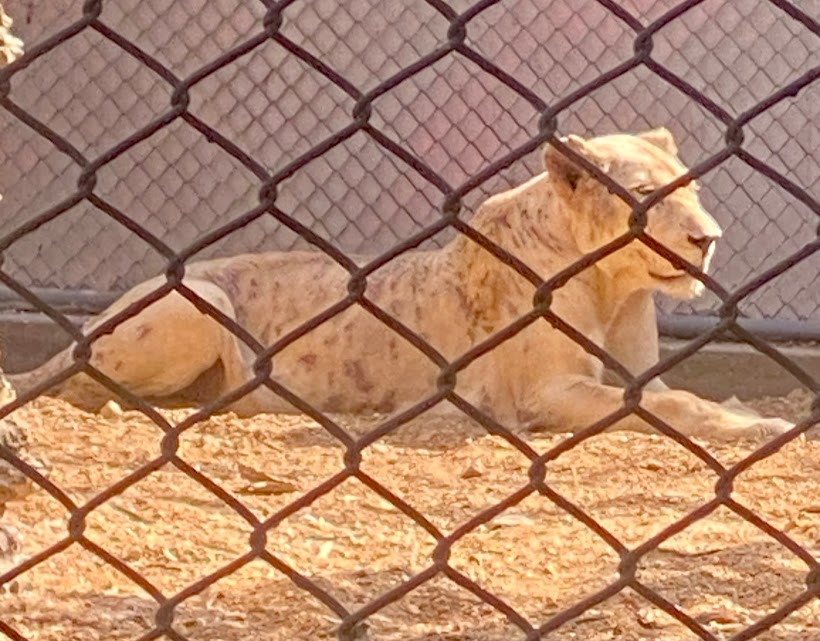
Mr. Siyal’s explanation seems unconvincing, especially as we observe, much to our alarm, the diet being provided to the animals. Snakes, lizards and crocodiles are being fed colour-dyed chicks, and a Rhesus macaque was seen eating a paratha and cooked cauliflower, foods entirely inappropriate for its diet. The MSD Veterinary Manual stated that ”Feeding inappropriate diets (eg, diets high in nonstructural carbohydrates) to these primate species has resulted in many health problems including gastro intestinal disorders.”
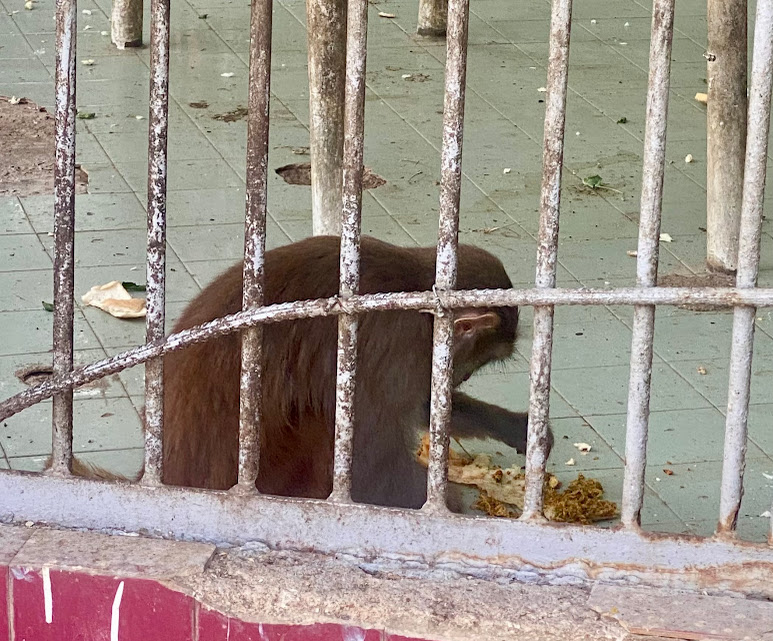
Trash is scattered across the zoo, and even stray cats wandering the grounds show signs of infection. Many cages lack appropriate terrain, forcing animals to live on cement and dirt floors, littered with rocks, conditions that can easily cause wounds and infections. The baboons are confined to small cages with barely any room to move. Visitors freely tossed stones and garbage at animals with little to no supervision. Creatures including the cassowary, lemur and chimpanzee are kept alone, some in cages that follow no hygienic standard whatsoever. “The animals struggle to keep their health in captivity and isolation,” Siyal acknowledged. “Taking care of these animals is a technical job and is Karachi Zoo’s responsibility.”
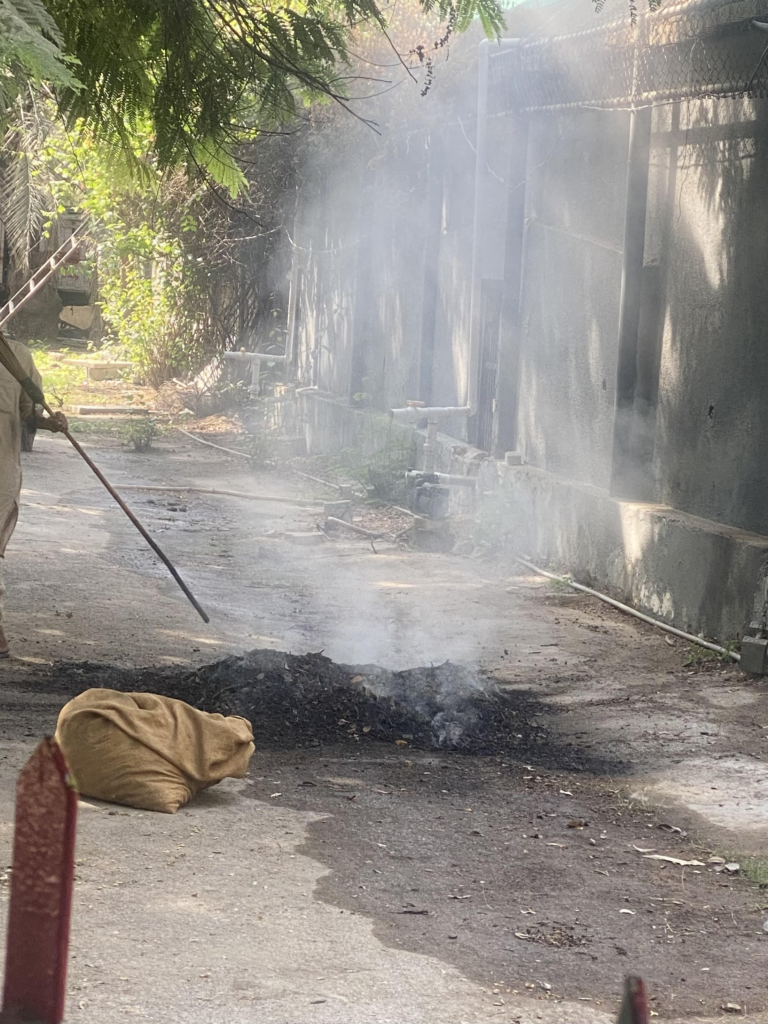
As we discussed responsibility, a more unsettling scene unfolded. A group of men were burning trash near the lions. This caused a thick layer of terrible smelling smoke to blanket through the area. Siyal said, “This matter of burning trash will be checked, it shouldn’t be happening.”
Siyal placed some responsibility on visitors, saying it is the collective job of those who enter the zoo to help keep it clean. Despite the documented concerns, Siyal maintained, “The animals are eating and drinking. The majority of them seem to be in good health. Diseases and other small problems are bound to continue.”
Chief Conservator of Wildlife, Javed Ahmed Mahar, however, took a harder stance. “Neither the zookeepers nor anyone raising their voice about the issue has any idea what they’re talking about… The management of the zoo needs to do better,” he said.
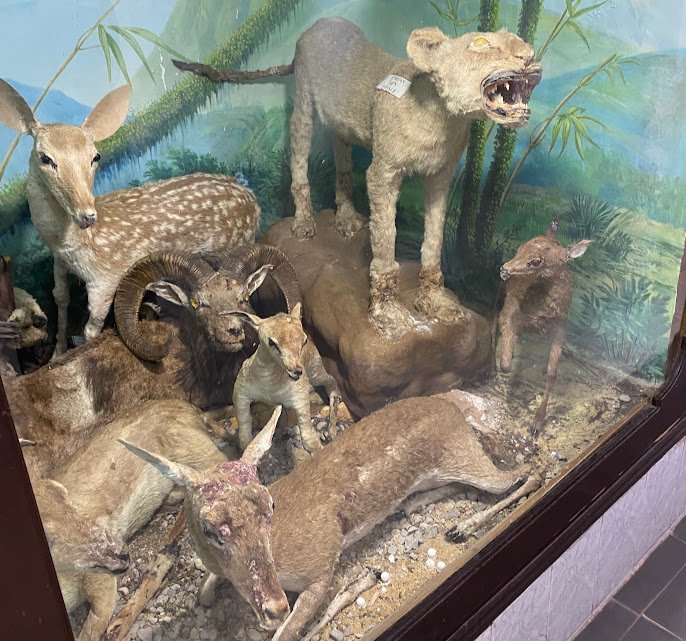
The zoo also contains an eerie collection of taxidermies, including lions, deer, pelicans and monkeys. It serves as a haunting image of the abuse and countless deaths that have occurred there.
Enclosures fail legal requirements
The specifics surrounding the violations of the law were mentioned by Mahar during a review meeting chaired by Chief Secretary Syed Asif Hyder Shah.
According to the 2020 law, big-cat enclosures must span at least 400 square yards, provide natural vegetation, offer indoor rest rooms with raised platforms and proper drainage, and include outdoor dens, elevated resting areas and water pools. Mahar said that Karachi Zoo fails to meet several of these mandatory standards and stressed that the deficiencies must be addressed “without delay.”
Shah instructed the Wildlife Department to prepare an enforceable compliance plan and directed zoo management to overhaul species records, upgrade animal-welfare standards and address structural maintenance failures. He raised alarm over a backlog of 129 wildlife-related summary trial cases pending since 2020, saying he would urge the Sindh High Court to expedite them because unresolved cases weaken enforcement of wildlife law. “The courts must treat the cases related to wildlife with care and urgency” said Mahar.
Sindh prepares ban on exotic species
Sindh has drafted legislation to restrict the import of non-native exotic species. Importing would only be allowed for approved scientific or research purposes. “How can we take a living being with no means of communicating or giving consent outside of its natural environment to be locked in a cage?” said Mahar.
Exotic species already living in Sindh would need to be registered, regularly inspected and prevented from uncontrolled breeding. Stronger penalties for illegal traders are also under consideration. “Non-native animals carry the risk of transferring disease,” said Mahar. He acknowledged the difficulty of keeping exotic species alive and well. “It is extremely difficult to replicate habitat for non-native animals that they can thrive in”
Accountability ahead?
Chief Secretary Shah has said the Wildlife Department will be held directly accountable for future violations and pledged to enforce wildlife laws “in both letter and spirit” to protect Sindh’s biodiversity. The zoo’s troubles highlight exactly the kind of negligence the Chief Secretary aims to eliminate. By insisting on accountability and pledging to uphold wildlife laws rigorously, he positions the recent zoo violations not as isolated missteps but as evidence of a system overdue for reform.

- Rat Race - August 2, 2026
- Inside Korangi’s Mangrove Biodiversity Park - July 23, 2026
- KMC Zoo Under Fire - July 19, 2026